
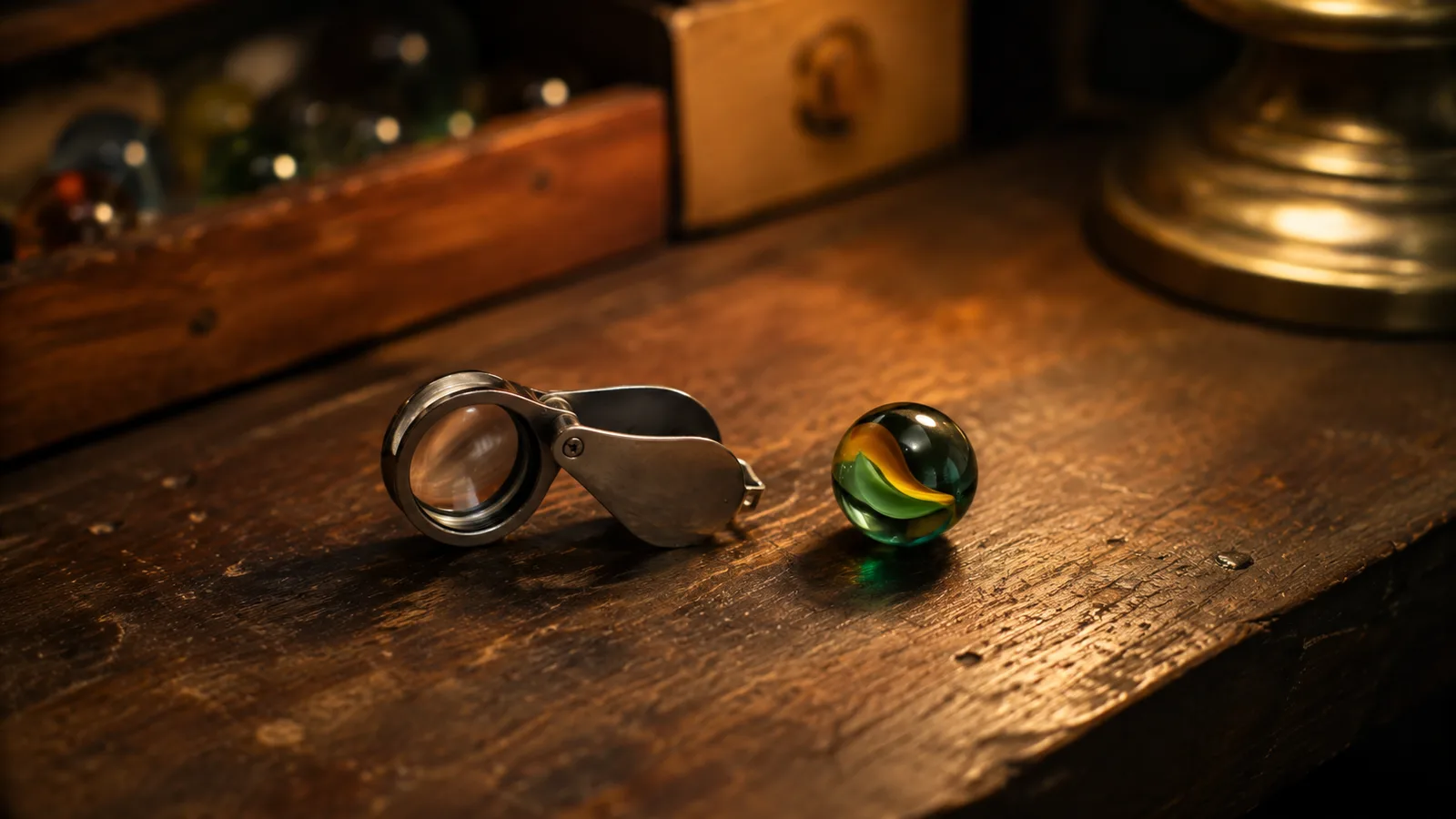
I have graded glass marbles and vintage glassware on and off for more than thirty years, and for most of that time I graded the slow way. Hold the piece up to the window, turn it in the light, squint until a seam or a chip decides to show itself. The window method has two weaknesses. The light never arrives at the angle you need, so the underside of a piece, where a star crack likes to live, stays in your own shadow no matter which window you stand by. And your eyes wear out long before the tray does, and tired eyes miss the exact fault you are looking for. So last year I bought a JARLINK 30x 60x illuminated loupe, a folding magnifier with a ring of LEDs around the lens, and I have used it on every batch of incoming marbles and every piece of glassware that has crossed the bench since. This is the honest review, the one the listing photos skip.
The short version is that I reach for it every day and it has paid for itself a hundred times over. The honest version is that the marketing makes it look easier than it is. The '60x' on the package is not the everyday tool you will assume it to be, the bright light needs an afternoon of practice before it helps more than it fights you, and the thing runs on button batteries that can drain on you if you are careless. If all that still sounds worth it, read on, because it genuinely is, once you know how it wants to be held.
The Quick Verdict
A genuinely useful pocket loupe for seeing chips, seams, and star cracks that a window never shows, but learn on the 30x and expect shallow focus at the higher power. The LED is the whole value and also the whole learning curve.
Amazon Check Today's Price →See the chip hidden where the window light never reaches
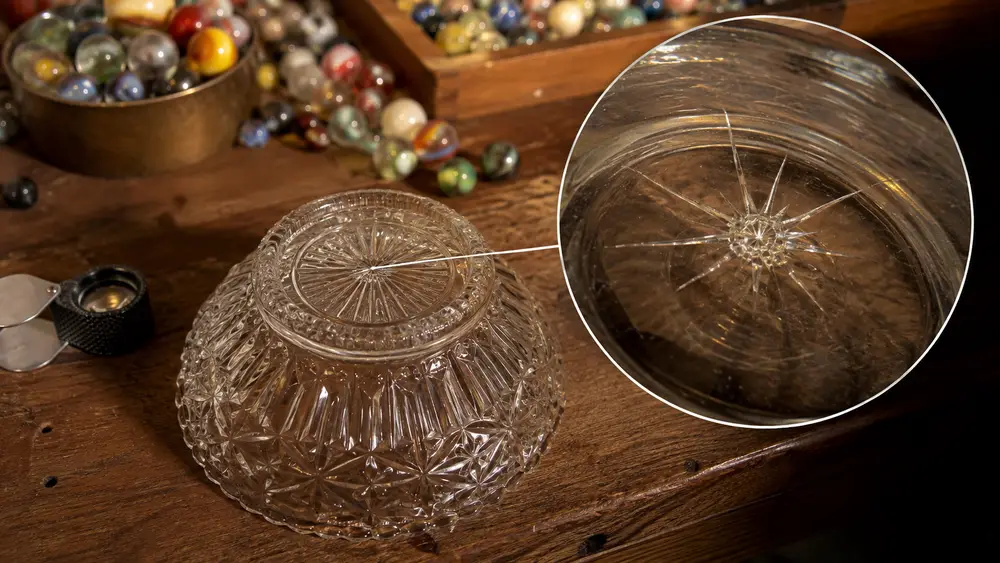
A star crack in the base mark halves a piece of glassware in one look, and a ring of LED light is what finds it. The JARLINK loupe is today's price for the kind of look you have been doing blind.
Amazon Check Today's Price on Amazon →How I've Used It
Ruth and I buy and sell vintage marbles and glassware out of a small shop in central Ohio, which means a week's work involves a fair number of pieces coming in from estate sales, farm auctions, and the back of somebody's pickup. A lot of that glass sat in a kitchen cupboard for fifty years before it reached us, and it needs a straight answer about its condition before we hand over cash for it. The loupe rides in my shirt pocket, which is the whole point of it. A bench magnifier lives on the bench, and a tool on a bench gets used only when you stand at the bench. The loupe comes along when I walk out to look at a lot.
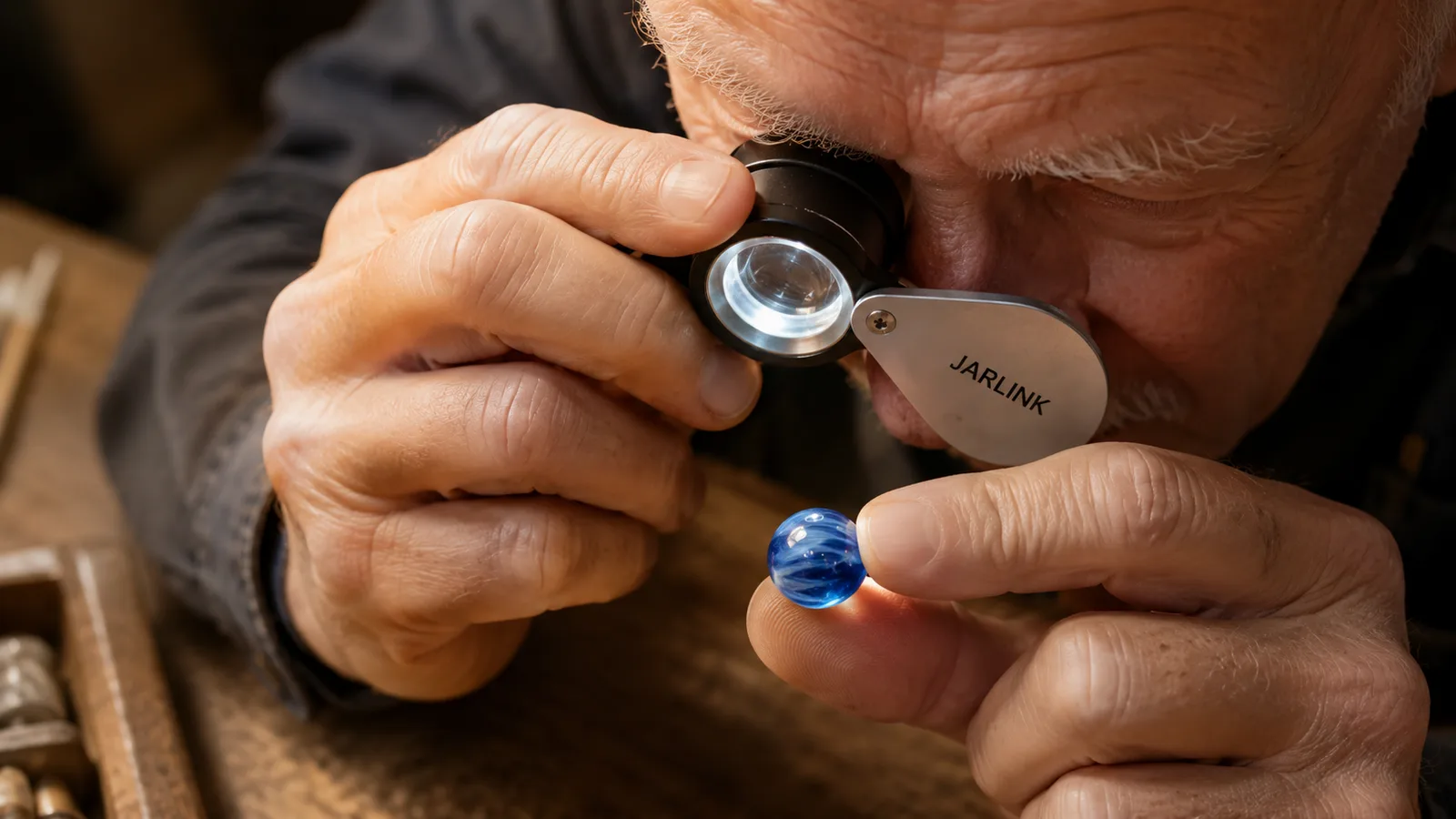
Once I settled into it, a marble check goes like this. I hold the loupe to my eye, thumb on the hinge, and I hold the piece in the other hand close to the lens. Elbows go on a table or on my knees, because a steady hand is not a courtesy, it is the entire method. I look for the base mark on glassware first, then the belly of the piece, then the rim, then the seam, and I turn the piece, never the loupe. That is the counterintuitive bit and the thing I did wrong for my first week if I am honest. The loupe is the fixed point and the glass does the moving.
If I am grading a marble, I am looking for three things in order: a chip on the surface, a broken or chipped pontil where the base joins the cane, and a hairline that has run a channel from a bruise into the glass. The loupe shows me all three a full season before my naked eye would have caught them. Nearly is the word this review keeps coming back to.
The LED Ring: Bright Is the Whole Value, and Bright Is the Whole Problem
The ring of LEDs around the lens is the reason this loupe earns its pocket. A ring light aimed right at the surface you are inspecting takes the underside of a piece, the inside of a pontil, the base mark under a foot, and lights them flat enough to read. That is the single most useful feature. Spend a morning with the shady side of a piece of glass under a show tent, a star crack hiding in your own shadow, and you come to believe in that little circle of white light the way you believe in a good lamp.
What nobody tells you is that glass is glossy, and a bright ring aimed straight into glossy glass bounces a good deal of it right back at your eye. Your first afternoon with a polished marble under this light is an afternoon of glare. The piece glows, the fine detail washes out, and you will briefly think you bought the wrong tool. You did not. The answer is the angle out of the center. Hold the piece slightly off to one side of the ring instead of at its dead center, and the glare steps aside and the detail comes back. It is a twenty-minute lesson, and it is the difference between a loupe that works and a loupe that just shines.
The first star crack it caught should have set me back the price of a bowl of pressed glass, and it did not. The crack was hiding in the foot of a small carnival bowl, pointing at the ceiling, invisible from every window I had. The flash of white under the LED caught it, and the sale went cold in my hand.
The '60x': What You Will Actually See
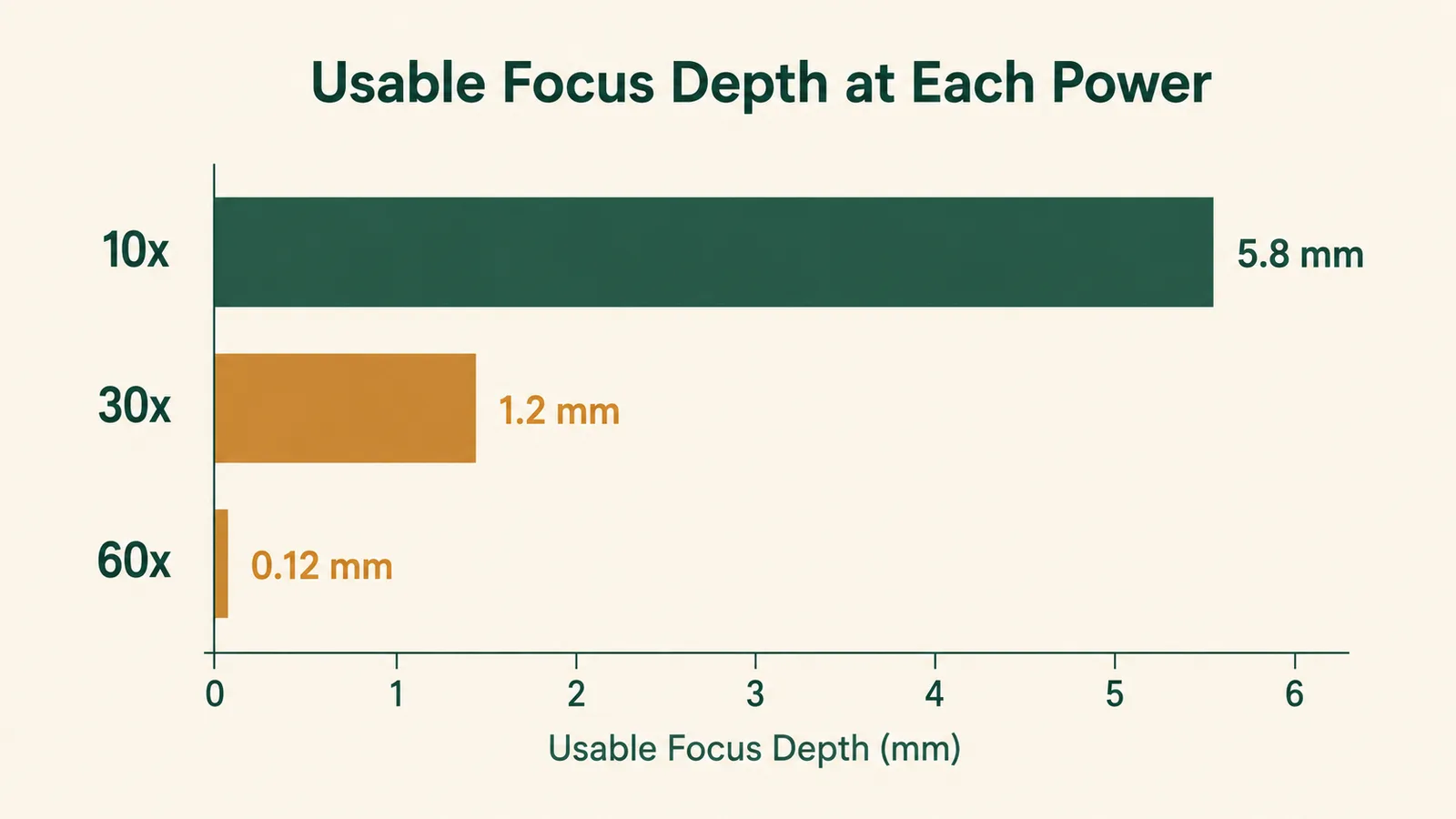
The package says 30x and 60x, and both have real glass to them, there is a second, smaller lens that flips down to multiply the power of the first. The honest truth is that you will live at 30x and visit 60x now and again. At the higher power the depth of focus becomes paper-thin, a sliver of surface is sharp and everything a thumb's width either side turns to soft blur. Set against a curved glass marble, that means you see a small crescent of the surface in focus and the rest soft. It is not a defect of this particular loupe, any loupe does this at that power, but it is a truth the package does not print.
My advice after a year: learn on 30x and leave the secondary lens alone for the first month. The 30x view already shows a hairline seam, a broken cane, a chipped edge, and the little surface pits that tell you a marble sat in gravel and rattled around a while. When the 30x gets boring and you are holding a marble in focus without hunting for it, then drop the second lens down for the small questions only, whether that dot is a chip or a bubble that broke through the grind, or whether the feather in a pontil mark is a real fracture or just a sharp fold of glass. For those two, the extra power earns its spot. For everyday grading, it just wears out your eye.
Batteries, the Hinge, and the Small Print
The light runs on two small button cells, and they hold up a good long time if you remember to fold the loupe when you are finished, because folding it cuts the switch and blanks the LED. Leave it open on the benchtop at close of day and you will burn a good slice of battery sitting there dead. This is the small print nobody features. Carry a pair of spares, keep them in the case with the loupe, and the battery thing stops being a thing.
The honest word on the build is that this is a working tool and not a heirloom. The body is a light metal case, the hinge has a little play in it that has not worsened in a year, and the strap guards it against the bench edge. The lens stays clean, the light stays bright, and the case it ships in is a thin little pouch that would not survive a drop on cement. For the money it does its job, and I will say it plainly: treat it like a work tool and it will be one. I have dropped it and it went right on reading a seam afterward.
Alternatives I Reached For Instead
Before I owned this loupe, I reached for a broad flat hand magnifier, the kind of lens you can lay over a page or hold over a whole marble at once. It still has one clear advantage this loupe does not touch: it shows a big area in a single look, so I can scan a tray of a dozen marbles for the obvious chip before I pull one out for the close work. I own both and I use both. The hand lens does the wide pass, and the loupe does the coin-size close pass that settles it.
On the other end, if you are grading a small run of high-value handmade American or German glass, neither is the last word. That work wants a proper inspection microscope on a bench with a stable arm and controlled light, the kind with a stand so nothing is held up to your streaming eye. A folding loupe in a hand is a quick look, a good quick look, and it knows when to hand a question off to the bigger tool.
What I Liked
- The LED ring lights up star cracks, base marks, and seams that a window beam never reaches
- 30x and 60x in one pocket-sized piece that folds small enough to live in a shirt pocket
- A single hairline chip it caught already paid for the loupe many times over
- The bright light turns any table into a lit bench, and it works outdoors in direct sun and under shade
Where It Falls Short
- The '60x' has a paper-thin focus at the higher power, and a marble's curve holds barely half a thumb of sharp glass at a time
- The LED glare off glossy glass takes practice to angle past before you settle into it
- The light lives on a button cell, not a rechargeable, and drains overnight if you leave it open
- It is not a microscope, it will not tell a repaired piece from a whole one, and it is not a stand for judging the highest-value glass
The Long Game: What a Year of Use Looks Like
If a year teaches you anything with a tool like this, it is that the small ones need care and then last. I have dropped this loupe twice, once into a field box of loose marbles, and it has gone right on reading seams both times. I wipe the lenses with a soft glass cloth whenever the pickups start to scatter light, and I fold it closed at the end of the day, which keeps the button cells and the sharp edges of the glassware out of each other's way.
The honest long-term note is that the tool has never once been what failed me. It is reliable. The failure is mine on the days I get impatient and skip the angle, and the loupe reminds me. It rewards the slow second pass, the one you take on a piece because it matters. That is the real recommendation: buy it, keep it in a pocket, and give it the twenty seconds it wants on the back of a piece of pressed glass before you hand over your money.
I can give you one exact afternoon that sums up where this loupe lives in my routine. A man came by the shop with a coffee can of cat's-eye marbles, the kind with the green and brown iris down the middle, claiming they had sat in his grandfather's drawer for fifty years. Under the window light they read clean and glossy, a nice little lot. I ran the JARLINK over each one before I gave a number. One of them, the coffee Iris that sat dead center in the can, carried a skinned fleck at the edge where the cane had pulled, clean and shiny, the kind a hopeful eye forgives on a Tuesday and a sharp buyer finds on a Saturday. I priced the lot the honest way, named the fleck out loud to the man, and we settled fair. He thanked me for it more than he would have thanked me for pretending. That is the real job, keeping everybody honest on the one piece that matters, and it is why the loupe is never far from my hand in that shop.
Who This Is For
This loupe is for the collector and the small dealer who does a good deal of quick grading out in the field, at flea markets, auction houses, garage sales, any table where a load of glass needs sorting fast. If you are the sort who picks up a box of old glassware and wants to know, before money changes hands, whether the foot is cracked or the bottom is sound, this is the tool. It is also a fair first loupe for a beginner who wants to actually understand what to collect before spending real money on it.
For that buyer it pays the way a good flashlight or a scale pays. It is one of those small, cheap tools that quietly earns its corner, needs no ceremony, and gets grabbed a dozen times a day once it lives in a pocket.
Who Should Skip It
Skip it if your collection is mostly stored and you only want to glance at a tray under the light, because a broad hand magnifier shows more at once and costs less trouble. Skip it if you are trading pieces where a single hairline chip moves the price by hundreds, because a loupe like this is the quick look that points the finger, not the courtroom that proves it, and at that level you owe yourself a stable inspection microscope. And skip it if you are not willing to practice holding the piece out of the glare, because you will be the second person to blame the mirror. For the middle of the market, where most of us actually live, this little lens is an honest best.
The crack you cannot see is the one that costs you the sale
A folding lens and a ring of light are cheaper than one mistaken purchase. If you buy or sell glass, this is the tool to carry before the next auction. Check today's price.
Amazon Check Today's Price on Amazon →