
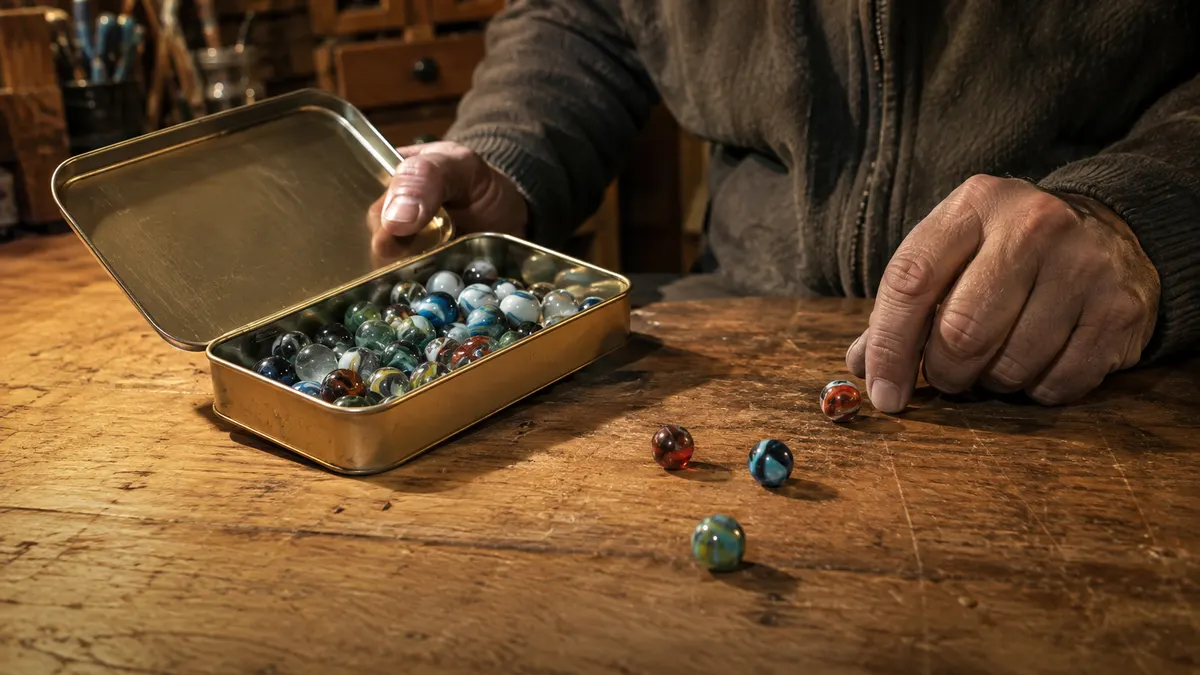
Most collectors I talk to got started one of two ways, and neither is how I'd do it if I were starting over. Either they emptied a savings jar into a wall of glassware before they could tell a mint swirl from a beat-up shooter, or they kept a coffee can of warped, chipped pieces because they never learned what to throw away. Both are understandable. Both waste money. A single honest tin, and for me that has meant the Toysmith Neato Classics 160-count set for years now, is the cheapest classroom in the whole hobby, because it gives you enough pieces to learn on without risking anything you would cry over losing. If I had one chance to do it again, I'd pick up that one tin and learn to read the glass before I spent another dollar. The pieces you keep, however modest they look to a stranger, are the ones you will come back to for years, and a good first tin gives you a fair sample of them while it is still cheap to be wrong.
That is the whole argument for starting small. A marble collection is not a pile of glass you accumulate until it looks impressive. It is a set of judgments you make piece by piece, and you cannot make those judgments until you have spent time with the glass in your hands. One tin gives you enough pieces to learn on, enough variety to discover what your eye is actually drawn to, and enough room in the box to keep only what earns its place. Everything after that is easy compared to the first tin. The people who skip the small step are the ones who end up with two hundred indistinguishable pieces and a budget they cannot explain. Slow is fine. Slow is how a collection that means something gets built, one handled marble at a time, and nobody who has done it for fifty years regrets the patient start.
One tin is the cheapest honest education in marble collecting you can buy
A 160-count tin of classic shooters gives you something to read, to sort, to learn from, and to keep. Start there and you will not be throwing money at glass you cannot yet judge.
Amazon Check Today's Price on Amazon →Step 1: Start with one honest tin of shooters
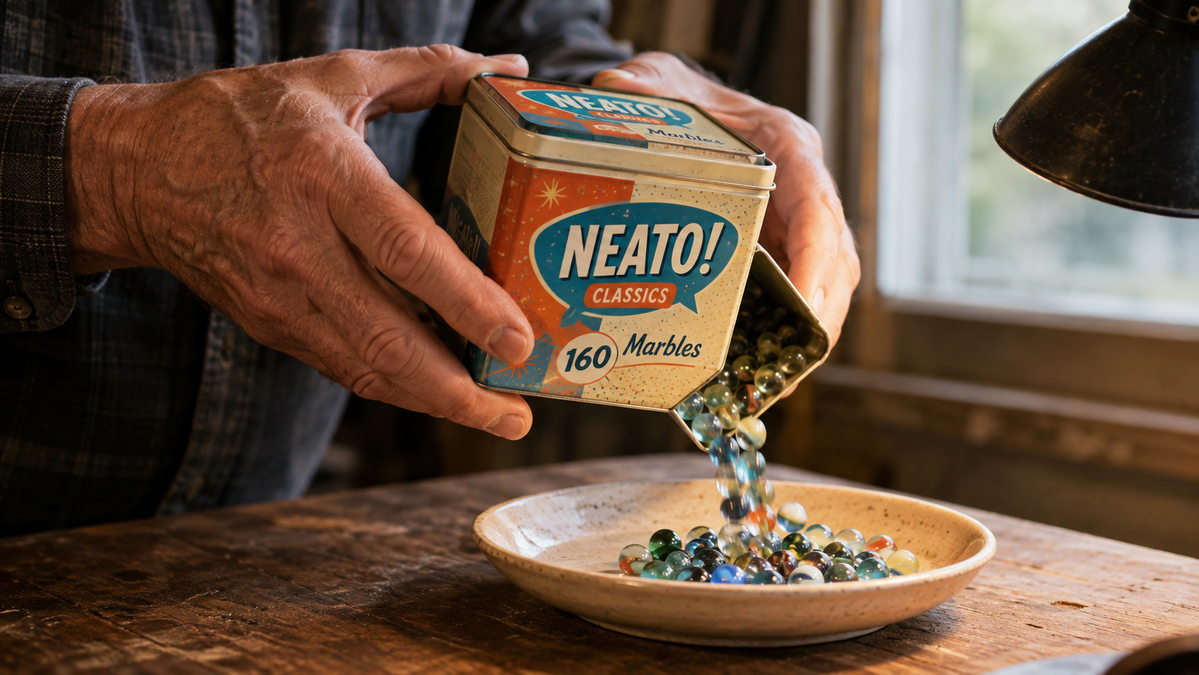
The tin I keep in mind here is the Toysmith Neato Classics marble set, 160 assorted glass shooters in a metal box with a lid. I go deeper on that exact tin in my long-term review, but the short version is this: between the tins you get a spread of colors, sizes, and the occasional swirl you would never have picked out of a display case. That variety is the point. You are not buying this to own 160 marbles you will display forever. You are buying it to figure out what your hand reaches for, to build the eye that tells you later what is worth more than pocket money, and to make the early mistakes cheaply while the stakes are still low.
The metal box matters more than people think. Loose marbles in a plastic bag will grind against each other every time you move them, and a paper box crushes. A tin holds its shape, keeps the pieces from rolling, and gives you a lid to snap shut when you are done. It is the first lesson in caring for glass: the container is part of the collection. I have seen beginners spend good money on rare pieces and then keep them rattling loose in a drawer, and it undoes the whole point. Start right and the habit carries. Keep that lesson close and the container stops being an afterthought. I have stored precious pieces in shaped, padded trays for decades now, but the habit of giving glass a proper home began with a plain tin and never left me.
Step 2: Learn to read the glass before you buy anything else
The single most useful habit I have built as a dealer is looking at a marble the way a jeweler looks at a stone. Hold it up to a window. Look through the body for air bubbles, for the way the swirl moves, for the thin line where the two halves of the mold met. A chip shows up as a dull spot where the surface should be clean and glossy. You learn this fast on a tin full of cheap shooters, because you have enough of them to lay side by side and compare. Bedside lamps and shop windows both work, the light just needs to come from behind the glass. Light is the free half of the tool. A north window, a reading lamp, even the headlights of a car at a pick, all of them will do as long as you hold the marble between the light and your eye and give yourself time.
Do not try to memorize a grading chart. Just handle them. Turn them. Roll them over your palm and feel for the pieces that are true and round and the ones that are slightly flatter on one side. After a tin or two you will be able to tell a good piece from a poor one at a glance, and that skill is what stops you from overpaying for years to come. It is also what makes the difference between a collection and a stack of assembly-line glass you cannot tell apart. Feel first, explain second, and the grading language follows on its own.

Step 3: Sort what grows and keep only what earns its place
Once the tin teaches you to read glass, the collection will start to grow on its own, and that is where the sorting begins. I do not keep most of what passes through my hands. I sort into three piles: keepers, pieces to trade, and the honest junk that goes back in the tin for playing. That last pile matters. It is what separates a collection from a hoard, and it is the hardest habit for new collectors to learn, because every piece feels like a potential keeper when you are just starting out. Discipline with the rejects is what everyone struggles with, so do not be ashamed when it is hard. Every serious collector I know has thrown a piece back at some point and winced, and then felt the collection get cleaner for it.
Keep the coppers and the ones whose colors stop you. Set aside the run-of-the-mill pieces you can trade with other collectors or use to practice your grading. And be willing to let the common ones go back in the playing tin. If you are torn between buying loose bulk and a ready tin, I have laid out that trade-off before. Buying a tin you can sort beats buying blind every time, and sorting a counted, matched box is a gentler first lesson than weeding a random sack of whatever came out of the factory.
Step 4: Learn how to pack and carry so nothing chips
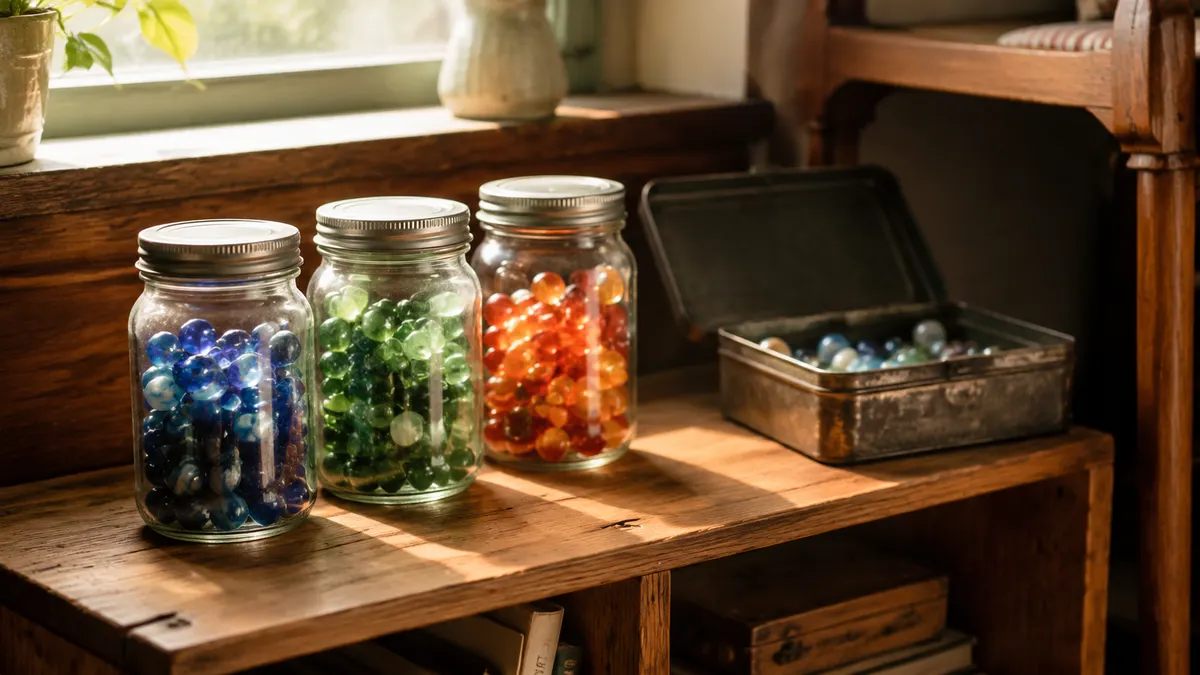
The thing that scratches the surface of a marble is another marble. I have lost good pieces to nothing more than a tin rattling around the floor of my truck while glass banged against glass on every pothole. Once I started buying and selling in earnest, I learned to pack separately, to cushion the tin when it traveled, and to never shake it when I meant to store it. A chipped marble stops selling, and a chipped keeper just stings. The fix is cheap: a length of felt, a padded pouch, a box that fits the tin without room to rattle. Pack the way you would ship a fragile thing, because that is exactly what a marble is. A little felt and a snug box have saved me more good glass over the years than any stamp or appraisal ever did.
This is where the collector's habits I leaned on for years of handling breakable glassware apply. Fragile things want a stable home and a padded path between one place and another. Give your marbles the same courtesy you would a piece of cut glass that cost real money, and they will stay true and round for a long, long time. Most surface damage in a small collection happens in transit, not in the cabinet, so this is the cheapest insurance in the whole hobby and the one beginners skip most often.
Step 5: Let the collection find its own direction
After a few months you will notice your eye keeps landing on the same kind of piece. Some collectors chase a particular company's swirls. Others reach for a narrow band of colors. Others only want the big fat shooters that fill the palm. Whatever it is, trust it. That is where the fun lives, and it is also where the collection becomes yours instead of a copy of what the market told you to like. The early tins teach you what you actually prize, and that knowledge is worth more than any single marble you will ever buy. Trust the pull. The eye you are building has no agenda beyond what genuinely pleases you, and a collection that pleases its owner is the only kind that keeps getting tended, year after year.
Starting with a single tin keeps the door open for that to happen. You are not locked into someone else's idea of a good collection, because you built the foundation cheaply and on your own eye. Once you know what you want, the buying gets easier and the mistakes get rarer, and the original tin slides quietly into the role of your trading and carrying box. It is the piece that started you and the piece you still reach for, and that is no small thing for a first purchase.
What Else Helps
None of the tools I use today are elaborate. A shallow white tray for sorting, a small jeweler's loupe for looking close, and a low shelf or a divided box for the keepers. If you want to know what I use to inspect glass closely, I cover the loupe I grade with elsewhere on the site. You do not need any of it on day one. You need the tin and your own patience, and that single Toysmith tin is enough to carry you through the first several months without adding a thing. Everything else can wait until your eye tells you it is wanted.
The thing that scratches the surface of a marble is another marble. I have lost good pieces to nothing more than a tin rattling around the floor of my truck.
Collect the way I wish I had: one good tin first
Start with the 160-count tin, learn to read the glass, keep only what earns its place, and let the collection build itself from there. It is the slow way. It is the honest way.
Amazon Check Today's Price on Amazon →